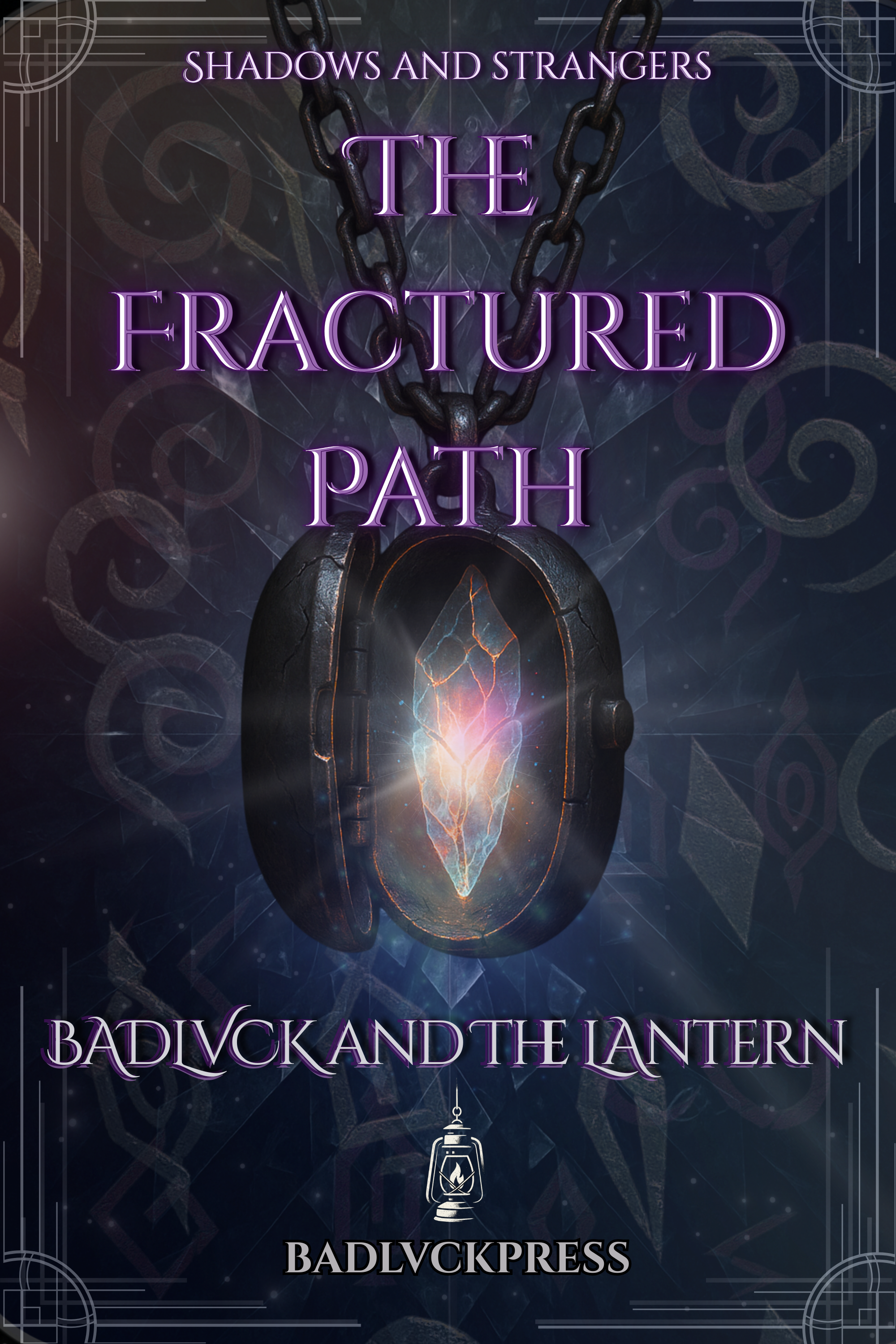
Every story begins somewhere.
For The Fractured Path, that beginning wasn’t a single idea, but a collection of strange fragments that slowly began to fit together, broken worlds, wandering travellers, ancient systems that no longer quite function the way they should.
The world of The Fractured Path is not a perfectly stable one. The realms themselves have begun to fracture, leaving behind places where reality bends, strange energies seep into the landscape, and forgotten structures wait quietly beneath the surface.
Some places feel almost familiar, small villages, distant mountains, caravan roads that stretch across quiet plains. But beyond those ordinary spaces, the world becomes stranger. Certain regions behave unpredictably. Some areas seem to exist slightly out of place. Others hold remnants of older systems whose purpose has long been forgotten.
Magic in this world doesn’t follow simple rules either.
Rather than traditional spells or rigid systems, much of the strange power in these realms comes from crystals, forgotten technologies, and deeper forces tied to the ancient structure of the world itself. Some characters understand fragments of these systems. Others only feel their effects without ever truly knowing what they are touching.
As the story unfolds, readers slowly discover that the realms are part of something far larger — a structure that stretches deep beneath the surface of the world and connects to the wider BADLVCK-Verse.
But at its heart, The Fractured Path is still a story about travelling through the unknown. About strange companions, uncertain roads, and the quiet realisation that the world may be far bigger — and far stranger — than anyone first believed.
Much of that world is still waiting to be discovered.
Worlds rarely appear fully formed.
For The Fractured Path, the world grew slowly, piece by piece, over several years. At first there were only fragments: strange landscapes, broken realms, travellers moving through places that didn’t behave the way normal worlds should. Small ideas appeared at different times, sometimes years apart, until eventually those fragments began to connect.
At some point the pieces stopped feeling random and started forming something whole.
One of the strangest and most beloved parts of the story came from a very real place.
The character Wisker, the small shadow fox (sometimes a ferret or even a rat), who accompanies Maxen, was partly inspired by a very chaotic and strangely intelligent dog in the real world — a dog called Max. Anyone who has spent time with a dog like that knows the feeling: the way they seem to understand far more than they should, the strange little expressions, the mischievous personality that makes them feel almost like another person living in the room.
Much of that spirit found its way into Wisker.
Although The Fractured Path explores mysterious magic, ancient crystals, and fractured realities, the story spends a lot of time simply living in the world. The surroundings matter. The quiet roads, the villages, the mountains, the campfires after long journeys. These moments are just as important as the larger mysteries unfolding behind the scenes.
Some readers prefer stories that rush from one major event to another. But with Shadows and Strangers, the goal has always been to experience the world as if you were travelling through it yourself.
To feel the weight of the road.
To sit beside the fire after a long day’s journey.
To watch strange places slowly reveal themselves as the path continues forward.
Those quiet moments are where the world begins to feel real.
And like the fractured realms themselves, the story continues to expand as more pieces fall into place.
The path, after all, is only just beginning.
— BADLVCK Press